
Why People Choose to Construct Your Own House (And What It Really Takes)
To construct your own house means building a home designed exactly around your life – your layout, your finishes, your priorities. Here’s a quick snapshot of what the process involves:
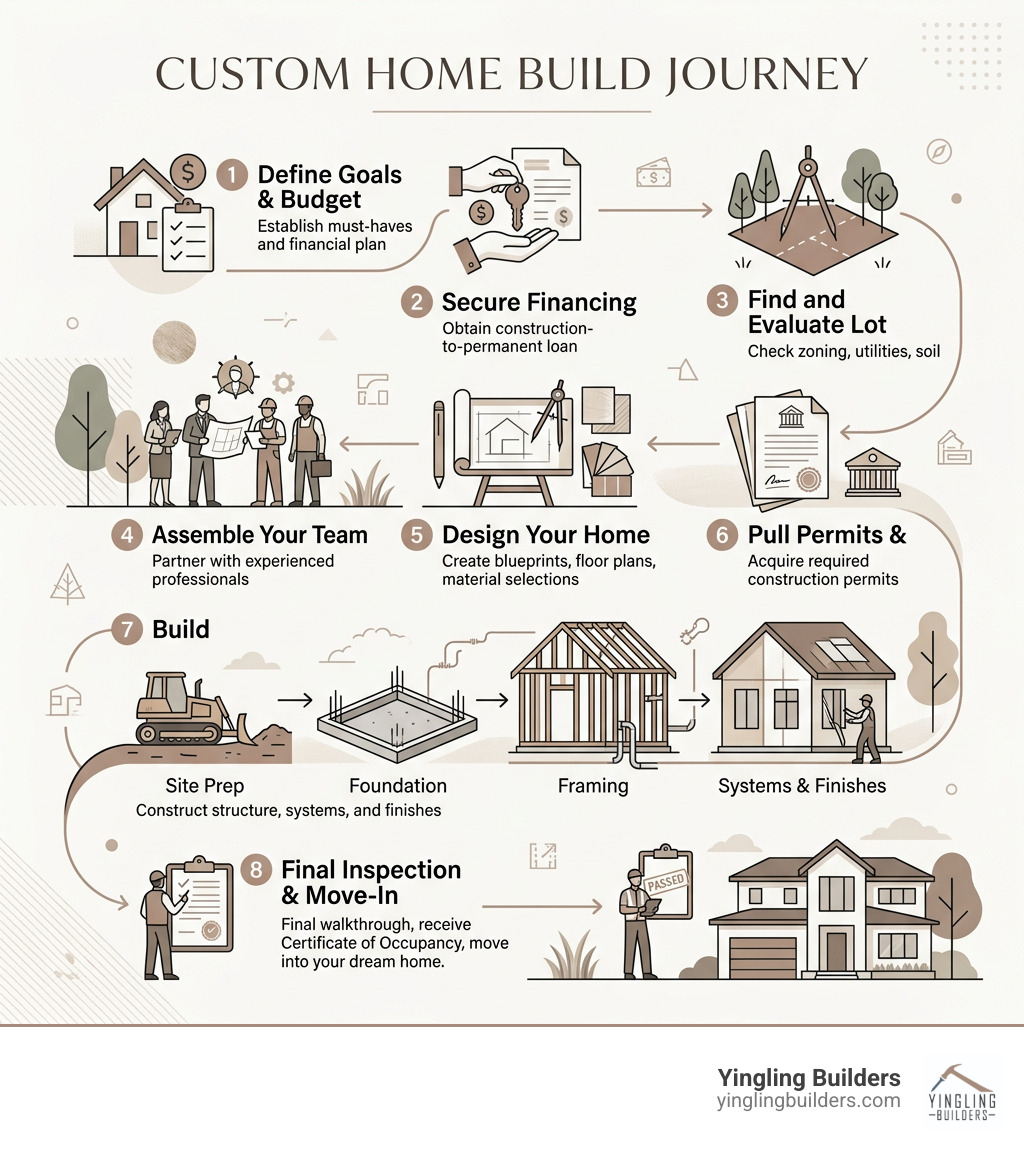
The custom home building journey at a glance:
- Define your goals and budget – know your must-haves before anything else
- Secure financing – typically a construction-to-permanent loan
- Find and evaluate your lot – check zoning, utilities, and soil conditions
- Assemble your team – a general contractor, trusted designers, and subcontractors
- Design your home – floor plans, authentic renderings, material selections
- Pull permits and approvals – required before any ground is broken
- Build – site prep, foundation, framing, systems, finishes
- Final inspection and move-in – certificate of occupancy, walkthrough, done
Building a home is one of the biggest decisions you’ll ever make. It’s not just about square footage or curb appeal. It’s about creating a space that fits your life now – and holds its value for decades to come.
For homeowners in West Central Illinois, deciding to construct your own house comes with a clear advantage: you control the design from day one. You get full control over the design, the materials, and the details that matter most to your family. No compromises. No inheriting someone else’s outdated choices or hidden maintenance issues.
But to construct your own house smoothly, the process has to follow the right sequence—planning, approvals, and build phases. Permits, lot evaluations, financing structures, contractor coordination – there are dozens of decisions that need to happen in the right order. One misstep early on can create avoidable delays and rework later in the build.
That’s exactly why having the right building partner makes all the difference.
This guide walks you through every stage of the custom home building process – from the first planning conversation to the day you get your keys.
The Essential Steps to Construct Your Own House
To construct your own house successfully, you must follow a disciplined, sequential timeline that transforms a raw piece of Illinois land into a finished masterpiece. To construct your own house with confidence, the work moves in a clear order—from site prep and structure to systems and finishes—so quality stays consistent at every phase.
At Yingling Builders, we view the construction phase as a series of critical milestones:
- Site Preparation and Excavation: This involves clearing the lot (usually at least 25 feet beyond the house perimeter), grading the land for proper drainage, and digging for the foundation.
- Foundation Pouring: Whether your design calls for a slab, crawl space, or full basement, the foundation is the anchor of your home. It requires precise pouring and several weeks of curing to reach maximum strength.
- Framing: Often called the “skeleton” of the house, this stage includes building the floor system, walls, and roof rafters. Seeing the house “dried in” with sheathing and windows is one of the most exciting moments for any homeowner.
- Rough-ins: Before the walls are closed, our in-house construction team and trusted partners install the “veins” of the home – plumbing, electrical wiring, and HVAC ductwork.
- Interior Finishes: This is where the house becomes a home. It includes insulation, drywall, premium flooring, custom cabinetry, and detailed trim work.
Following a professional Custom Home Steps guide ensures that no detail is overlooked. For a deeper look at what happens behind the scenes, explore our article on what to expect at each home construction stage.

Planning and Design with Expert Designers
The most successful projects begin long before the first shovel hits the dirt. We work with a team of expert designers to ensure your floor plan isn’t just beautiful, but functional for your specific lifestyle.
During this phase, we refine the plan so you can construct your own house with fewer surprises during construction. We provide authentic renderings that allow you to visualize the flow of the home, the height of the ceilings, and how natural light will interact with your chosen finishes. This level of planning reduces ‘on-the-fly’ changes during construction, which are a leading cause of delays and scope changes.
Whether you are looking for a sprawling ranch in Brown County or a multi-story estate in Jacksonville, you can find inspiration in our Portfolio. If you’re ready to start sketching, learn how to create your own custom floor plan to bring your vision to life.
Key Considerations to Construct Your Own House
Navigating zoning, permits, and inspections is the ‘paperwork track’ that keeps your construct your own house timeline moving. To construct your own house in West Central Illinois, you must adhere to specific local zoning laws and building codes.
- Zoning Laws: These dictate what can be built on a specific lot, including setbacks from property lines and height restrictions.
- Building Permits: A permit is more than just a fee; it is a green light from the local municipality (like Quincy or Beardstown) that your plans meet safety standards. Building permit requirements and fees vary by municipality and project scope, so confirming expectations early helps prevent schedule disruptions.
- Inspections: Rigorous inspections occur at multiple stages – foundation, framing, rough-ins, and final. These ensure the home is safe, energy-efficient, and built to last according to the Illinois Energy Conservation Code.
Our Custom Home Builder Process Guide provides a comprehensive look at how we manage these hurdles on your behalf.
Financing and Land Acquisition for Custom Builds
Securing the right financial vehicle is the first step toward breaking ground. Most clients who choose to construct your own house utilize a construction-to-perm loan.
This type of financing is unique because it covers the cost of the land and the construction phase in a single closing. During construction, funds are released in stages as milestones are completed, with the permanent mortgage phase beginning after the home is finished. Once the home is complete, the loan converts into a traditional permanent mortgage.
If you plan to construct your own house, the lot selection is just as important as the floor plan. You don’t necessarily need to own land before starting the conversation, but a topographic survey and site evaluation are essential before closing on a lot. We help evaluate potential sites in areas like Adams County and Pike County for utility access, soil stability, and grading challenges to ensure your dream home has a solid start. For more details, see our guide on custom home financing.
Professional Management vs. the Owner-Builder Approach
While some consider the ‘owner-builder’ route, the reality of managing a ground-up build is often overwhelming without deep construction experience. Acting as your own general contractor means you assume all legal liability, insurance requirements, and the daunting task of vetting and scheduling dozens of subcontractors.
At Yingling Builders, we provide a stress-free alternative. We leverage our in-house construction expertise and long-standing relationships with trusted partners to manage every moving part with expert precision.
| Feature | Professional GC (Yingling Builders) | Owner-Builder Approach |
|---|---|---|
| Project Management | Handled by dedicated project managers | Full-time job for the homeowner |
| Subcontractor Vetting | Access to proven, high-end craftsmen | High risk of hiring unvetted labor |
| Quality Control | Professional oversight at every stage | Dependent on homeowner’s knowledge |
| Risk Mitigation | Builder carries insurance and warranties | Homeowner assumes all liability |
| Scheduling | Streamlined through established networks | Prone to delays and “no-shows” |
Choosing a professional team helps you construct your own house with clearer scheduling, tighter coordination, and consistent quality control. Learn more about what to consider before building your dream home and how our custom home process protects your investment.
Frequently Asked Questions about How to Construct Your Own House
Understanding the timeline, key decisions, and benefits is essential when you decide to construct your own house.
What factors influence the overall investment when you construct your own house?
The overall investment to construct your own house depends on your plan complexity, material selections, and site conditions, especially decisions that affect structural engineering and performance.
Several factors influence this:
- Architectural Complexity: Vaulted ceilings, intricate rooflines, and expansive windows increase labor and material costs.
- Material Quality: Choosing premium finishes like quartz countertops, hardwood flooring, and high-performance HVAC systems ensures long-term value.
- Site Conditions: Remote locations or steeply graded lots in the Illinois river bluffs may require additional engineering and utility work.
Is it better to buy an existing home or construct your own house?
While buying an existing home in towns like Winchester or Rushville may seem faster, it often involves compromises. To construct your own house is to invest in a property that is 100% tailored to your needs from day one.
New custom construction offers:
- Modern Efficiency: New custom construction can improve comfort and performance through modern insulation, air sealing, and right-sized HVAC design.
- No Hidden Issues: You won’t have to worry about aging foundations, outdated wiring, or mold hidden behind 50-year-old drywall.
- Lifestyle Customization: You can design a home that prioritizes your specific needs, such as a dedicated home office, a chef’s kitchen, or outdoor living spaces.
In the long run, the custom home cost is justified by the lack of immediate renovation needs and the superior quality of life it provides.
How long does the custom construction process take?
A ground-up custom build typically takes about 10–16 months after permits are issued, depending on plan complexity, site conditions, and seasonal factors, especially if you plan to construct your own house in West Central Illinois.
This timeline depends on the complexity of the design and external factors like weather. In West Central Illinois, we carefully plan our schedules to account for seasonal changes, ensuring the house is “dried in” before the harshest winter months whenever possible. Our Process page details how we maintain momentum to get you into your new home as efficiently as possible.
Conclusion
Deciding to construct your own house is a journey toward creating a legacy for your family. It is an opportunity to prioritize enduring quality and dedicated craftsmanship over the convenience of a “cookie-cutter” home.
At Yingling Builders, we believe the process should be as rewarding as the result. Our team provides a seamless, quality-first approach throughout West Central Illinois – from Mount Sterling to Jacksonville and everywhere in between. By combining our in-house construction expertise with a network of trusted designers and subcontractors, we ensure your custom-built home or high-end renovation is delivered with minimal disruption and maximum value.
When you construct your own house with Yingling Builders, you get a true partnership—clear communication, steady progress, and craftsmanship you can feel in every detail. Our commitment to a client partnership, a seamless process, and dedicated craftsmanship ensures your new home will enhance your lifestyle for years to come.
Construct your own house with a builder who treats communication and coordination as part of the craft.**** Contact Yingling Builders to start the conversation and experience a guided process designed to protect quality at every phase.