
Why Building Permit Requirements Matter Before You Break Ground
Building permit requirements are the legal rules set by your local government that determine when you need official approval before starting construction, renovation, or demolition work on a property.
Here’s a quick overview of what most homeowners need to know:
| Situation | Permit Typically Required? |
|---|---|
| New home construction | Yes |
| Room additions | Yes |
| Deck over 30 inches above grade | Yes |
| Accessory structure over 120 sq ft | Yes |
| Swimming pool | Yes |
| Minor repairs (painting, flooring) | No |
| Tool shed under 120 sq ft | No |
| Fence under 6 feet | No |
| Roof repair under 33% of roof area | No |
The core purpose of building permits is simple: to protect people. As stated in Michigan’s building code, permits exist to ensure “public safety, health and welfare insofar as they are affected by building construction.” That means structural strength, fire safety, proper egress, and sanitation — all the things that make a home safe to live in for decades.
For homeowners in West Central Illinois planning a custom home, understanding permits early can mean the difference between a smooth build and a costly, stressful delay. Every jurisdiction — from small rural counties to larger municipalities — sets its own rules, thresholds, and fees. What requires a permit in one town may be exempt in the next.
This guide walks you through everything you need to know: when permits are required, what documents you’ll need, how the approval process works, what inspections to expect, and what happens if you skip this step entirely.
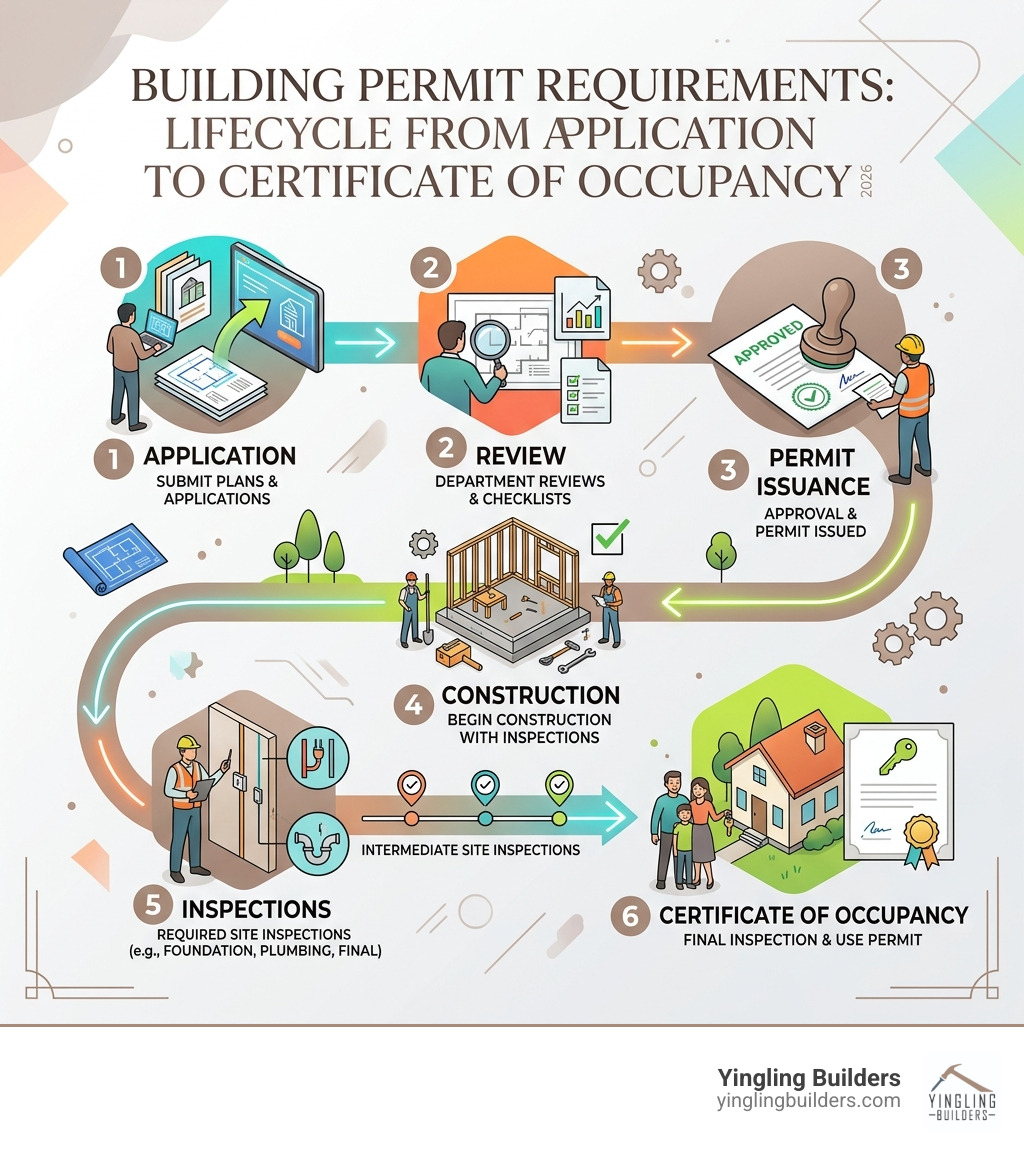
Basic Building permit requirements terms:
Understanding Building Permit Requirements for Your Project
Building permit requirements are the legal standards set by local jurisdictions to ensure that construction projects are safe, structurally sound, and compliant with zoning laws. These regulations are not just bureaucratic red tape; they are essential safeguards that protect the long-term value of your property and ensure that all work meets the rigorous safety standards necessary for modern living.
In West Central Illinois, whether you are in Sterling or Quincy, these codes ensure that buildings can withstand the local climate and geological conditions. Following the custom home process correctly means respecting these zoning laws from day one. These requirements cover everything from structural strength and fire safety to sanitation, light, and ventilation. By adhering to these standards, we ensure that your home is a safe haven for your family and a sound investment for the community.

When Are Building Permits Mandatory?
Building permit requirements mandate approval for any project involving construction, enlargement, or structural modification. Essentially, if you are changing the footprint of your home or making structural modifications, you need a permit.
In the City of Quincy, IL, for example, permits are mandatory to ensure that any “material alteration” follows the International Residential Code. When we guide you through building your dream home module by module, we account for these requirements during the very first stages of planning. Mandatory permits usually cover:
- Any new structural construction or additions.
- Cutting away any wall or partition.
- Removing or cutting structural beams or bearing supports.
- Changing any required means of egress (exits/entryways).
- Converting non-habitable space (like a garage) into a living area.
Common Projects That Require Building Permit Requirements
Most building permit requirements apply to significant exterior and interior improvements. Even projects that seem “outdoor only” often fall under the watchful eye of local building departments to ensure they don’t interfere with utility lines or neighborhood safety.
According to Lake County, Illinois standards—which reflect many local Illinois codes—the following projects almost always require a permit:
- Decks: Any deck more than 30 inches above the adjacent grade requires a permit to ensure proper railing height and structural anchoring.
- Accessory Structures: Detached garages, large sheds (typically over 100–120 square feet), and even sea cargo containers used for storage.
- Swimming Pools: Any pool capable of holding a certain depth of water (often 24 inches or more) requires a permit, primarily to ensure proper safety barriers and electrical grounding are in place.
- Basement Finishing: If you are adding walls, bedrooms, or bathrooms to a previously unfinished space.
- Major Systems: Significant electrical upgrades, such as a panel change-out, or plumbing relocations during a high-end renovation.
Typical Exemptions for Minor Repairs
Under most building permit requirements, ordinary repairs and maintenance do not require permits, provided they do not involve structural changes or the relocation of major mechanical systems. These are often referred to as “cosmetic” or “maintenance” updates.
In jurisdictions like the City of Beardstown, you can typically perform the following without a permit:
- Interior Finishes: Painting, tiling, carpeting, and installing cabinets or countertops.
- Minor Exterior Work: Siding repairs or window replacements (as long as the opening size doesn’t change).
- Small Sheds: Tool or storage sheds that do not exceed 120 square feet and are used as accessory structures to a dwelling.
- Roofing: Minor roof repairs. Some areas, like Nashville, specify that repairs not exceeding 33% of the roof area are exempt, while others allow “re-roofing” as an over-the-counter permit.
- Fences: Fences and free-standing masonry walls that are not over 6 feet high (though you must still check local setbacks).
The Step-by-Step Process to Secure Your Permit
The process for meeting building permit requirements involves submitting an application with detailed construction plans, undergoing a professional review, paying the necessary fees, and receiving official authorization before work begins. This structured approach ensures that every phase of your build is documented and compliant with local codes.
In Jacksonville, IL, as in most of our service areas, the process begins with a formal application. We follow a comprehensive process guide to ensure no detail is missed. This isn’t just about filling out a form; it’s about proving to the city or county that your dream home is engineered for safety.
Essential Documentation and Authentic Renderings
To apply for a permit, you must provide a “submittal package.” This package is the blueprint for your project’s legality. Our process ensures that all necessary paperwork is gathered before we approach the building department.
Required documents typically include:
- Site Plans: A detailed map showing property lines, existing structures, and where the new construction will sit.
- Structural Drawings: Detailed plans showing how the home is framed, the foundation depth, and load-bearing points.
- Authentic Renderings: While optional, these help visualize the final structure and ensure it meets aesthetic or historical requirements in certain districts.
- Geotechnical Reports: Often required for new foundations or additions over 600 square feet to ensure the soil can support the weight of the structure.
- Energy Compliance Reports: Documents like “REScheck” that prove the home meets Illinois energy efficiency standards.
Navigating Local Illinois Building Permit Requirements
Building codes and permit fees vary significantly by jurisdiction. In West Central Illinois, you might find that Pike County has slightly different submission requirements than Adams County or Morgan County.
Our team is well-versed in these local nuances. We understand that custom home steps involve more than just hammers and nails; they involve securing approvals from:
- Zoning Departments: To ensure your home fits within setbacks and land-use rules.
- Health Departments: Especially critical in rural areas for private septic system approvals.
- Fire Districts: To ensure adequate water flow and access for emergency vehicles.
- Public Works: For driveway culverts and utility connections.
Inspections and the Path to Occupancy
Inspections are mandatory site visits conducted by local officials at specific construction milestones. These are not “gotcha” moments; they are vital quality control checks that verify the work adheres to the approved plans and safety codes. They ensure the enduring quality of your custom home and provide peace of mind that everything behind the walls is done right.
During the construction stages, we coordinate several key inspections:
- Foundation/Footing: Checked before concrete is poured to ensure the ground is stable and the rebar is correctly placed.
- Framing: Conducted once the “skeleton” of the house is up but before the drywall hides the structure.
- Mechanical Rough-ins: The plumbing, electrical, and HVAC systems are inspected while they are still exposed.
- Final Inspection: The last check to ensure all safety systems (smoke detectors, handrails, egress) are functional.
The Role of the Certificate of Occupancy
The Certificate of Occupancy (CO) confirms all building permit requirements have been satisfied. It is the final document issued by the building department, confirming that the structure is safe for habitation and all building permit requirements have been met.
Without a CO, you cannot legally move into your home, and utility companies may refuse to hook up permanent services. This document is the culmination of the entire permit process, proving that your home has been built to the highest standards of safety and craftsmanship. It marks the official transition from a “construction site” to a “legal residence.”
Frequently Asked Questions about Building Permits
What happens if I build without a permit?
Building without a permit is a risky move that can lead to severe consequences. If discovered, the local building department can issue a “Stop Work Order,” levy significant fines, and even require you to tear down completed work so they can inspect what’s underneath. Furthermore, unpermitted work can lead to issues with homeowners’ insurance claims and make it nearly impossible to sell your property later, as title companies and buyers will look for a clear permit history.
How long does the building permit approval process take?
The timeline depends entirely on the complexity of the project and the current workload of the local building department. For a simple “over-the-counter” permit (like a water heater or re-roof), it might take a single day. For a new custom home, the review process typically takes between two to four weeks. In some jurisdictions, a “first review goal” might be 21 days for a single-family residence.
Are there special requirements for owner-builders?
Yes. In Illinois, many jurisdictions allow homeowners to act as their own general contractors (often called “Self-Permitting”). However, this requires you to sign an affidavit assuming full legal responsibility for the work. You must still adhere to all the same building permit requirements, pass all inspections, and ensure that any subcontractors you hire are properly licensed and bonded.
Conclusion: Partnering for a Seamless Build
Navigating building permit requirements is a critical step in creating a home that offers long-term value and an enhanced lifestyle. While the paperwork and inspections may seem daunting, they are the foundation of a safe, legal, and high-quality build. By partnering with a team that prioritizes dedicated craftsmanship and a seamless process, you ensure that every regulatory hurdle is handled with precision.
At Yingling Builders, our team works to deliver high-end custom homes and renovations throughout West Central Illinois. From the first site survey to the final Certificate of Occupancy, our commitment to client partnership and quality materials ensures your dream home is built to last—without the stress of navigating complex codes alone.
Ready to navigate building permit requirements with confidence? Start your custom home building process with a trusted Illinois builder who prioritizes precision, craftsmanship, and a seamless client experience. Contact us today to begin planning a home built to the highest standards.