
Why Building a House on Your Own Land Is One of the Most Rewarding Decisions You Can Make
Houses built on your land give you something no subdivision or spec home ever can: complete control over where you live, how your home is designed, and the quality of every detail.
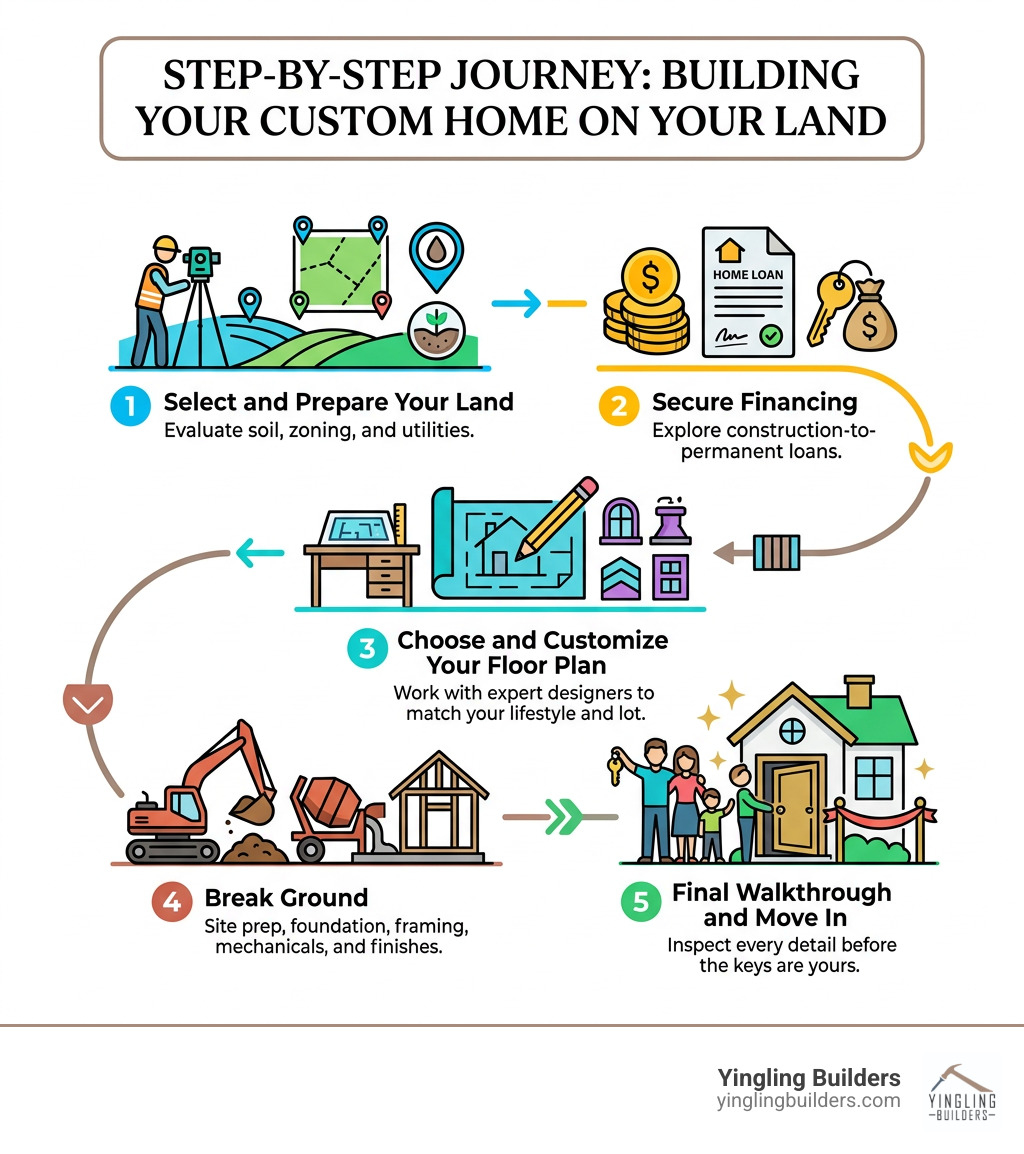
Here is a quick overview of how it works:
- Select and prepare your land — evaluate soil, zoning, utilities, and lot coverage rules
- Secure financing — explore construction-to-permanent loans and use land equity toward your down payment
- Choose and customize your floor plan — work with expert designers to match your lifestyle and lot
- Break ground — site prep, foundation, framing, mechanicals, and finishes
- Final walkthrough and move in — inspect every detail before the keys are yours
Every piece of land is unique. That is exactly what makes this process exciting — and exactly what makes it challenging.
Unlike a subdivision build, houses built on your land start with site realities—utilities, soils, drainage, and local rules—before design decisions are finalized. For houses built on your land, soil, utilities, zoning, drainage, and lot dimensions shape what’s possible—and what approvals, prep work, and build steps are required.
For discerning homeowners in West Central Illinois, this process is not just about building a house. It is about creating a home that fits your land, your life, and the standard of quality you expect to last for decades.
This guide walks you through every major step — from raw land to ribbon cutting — so you can move forward with confidence.
Selecting and Preparing the Perfect Parcel for Houses Built on Your Land
Selecting land for houses built on your land comes down to three things: buildability, access to utilities, and what local rules allow. Whether you are looking at acreage in Adams County or a quiet lot in Jacksonville, IL, the land itself dictates the “footprint” of your future life.
When evaluating a potential site, your first priority should be the geographical locale. Does it match your lifestyle? A remote rural backdrop offers tranquility, while a lot near the center of Mount Sterling or Quincy provides proximity to local amenities. Beyond the view, we must look at the technical details. A professional land surveyor is essential here; they provide a detailed legal description of your lot and help identify flood zones or historical data that could impact your build. You can find qualified professionals through the Illinois Professional Land Surveyors Association to ensure your boundaries are accurately marked.
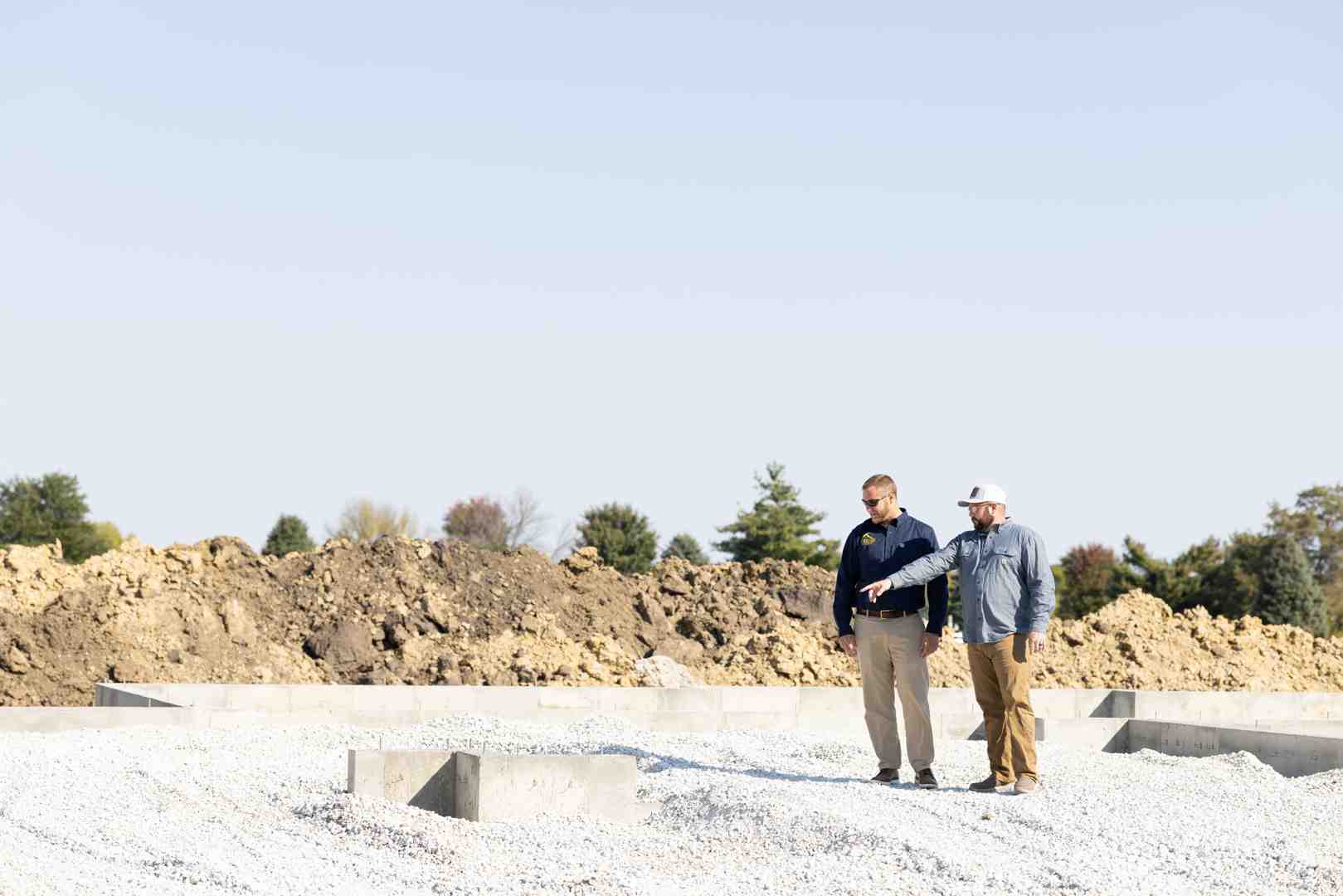
Soil conditions are a deciding factor for houses built on your land, because they influence foundation design, drainage planning, and long-term stability. Soil tests determine the stability and load-bearing capacity of the ground. In West Central Illinois, we want to ensure the soil can support a heavy foundation without shifting. Zoning regulations and building codes guide houses built on your land from design through inspections, helping ensure safety, compliance, and long-term performance. They ensure your home is safe, structurally sound, and functional. Adhering to these standards protects your investment and your family. For a deeper look at the roadmap, you can find more info about the custom home steps to guide your journey.
Navigating the Challenges of Building on Raw or Rural Land
For houses built on your land in rural areas, the biggest early challenges are utilities, wastewater, water supply, and access for construction equipment. Unlike a pre-developed subdivision, rural land in places like Pike or Cass County often lacks “plug-and-play” infrastructure.
- Utility routing: We must plan for essential services. This involves trenching for electricity and gas lines, which can be a significant undertaking if the main lines are far from your building site.
- Septic systems: Without a municipal sewer connection, you will need a custom-designed wastewater management system tailored to your soil’s percolation rate.
- Well drilling: Securing a reliable water source is paramount. Digging a well requires specialized equipment and knowledge of local water tables to ensure quality and flow.
- Property surveying: Precisely defining boundaries prevents future legal headaches and ensures your home sits exactly where it should.
Understanding these unique demands, such as the load-bearing capacity of the soil, is crucial for a stable foundation. We coordinate the specialists and documentation needed for houses built on your land, so decisions are made with verified site data, not assumptions.
Understanding the Land-to-Building Ratio
The land-to-building ratio dictates how much of your property can be occupied by structures, ensuring compliance with local ordinances. This is a municipally regulated metric, often expressed as a percentage. For example, if your local code allows a 30% ratio, your home and garage cannot exceed 30% of the total land area.
- Municipal regulations: Every town, from Beardstown to White Hall, has its own rules governing property development.
- Lot coverage: We help you maximize your usable space while respecting these legal limits.
- Setbacks: These are the required distances between your home and the property lines. They are vital for privacy, fire safety, and aesthetic consistency in the area.
- Drainage requirements: Proper grading ensures that rainwater flows away from your foundation and doesn’t negatively impact neighboring properties.
Designing a home that fits these constraints requires a creative touch. You can view our portfolio of site-specific designs to see how we’ve maximized the potential of various lot shapes and sizes across Illinois.
Financial Planning and Custom Home Financing Options
Securing a construction loan is a common step for houses built on your land, and the timing matters, ideally after site feasibility is confirmed. Most homeowners choose a construction-to-permanent loan. This “single-close” mortgage covers the cost of building and then converts into a traditional mortgage once the home is finished.
One of the biggest advantages of houses built on your land is the ability to use land equity. If you already own your lot, its appraised value can often serve as your down payment, potentially eliminating the need for a large cash outlay. We recommend setting aside a contingency reserve for houses built on your land to handle unforeseen site conditions or scope clarifications discovered during construction. For more clarity, check out our detailed guide on custom home financing or explore new construction financing insights to see which path fits your goals.
Planning the Full Scope of Houses Built on Your Land
Accurately estimating the cost of your custom home involves accounting for all aspects of the build, from site preparation to high-end finishes. It’s important to look beyond the plan layout and account for site prep, utilities, permitting, and finish selections as part of the full project scope.
- Site preparation: This includes clearing trees, removing old structures, and grading the land for proper drainage.
- High-end materials: Investing in quality components—like superior insulation and durable siding—ensures your home offers enduring quality.
- Authentic renderings: We use authentic renderings to help you visualize the final product with precision, ensuring the design matches your expectations before a single nail is driven.
- Long-term value: We emphasize durable materials, performance-minded assemblies, and thoughtful layouts that support daily living for years to come.
To get a better handle on the numbers, spend some time understanding custom home costs so you can budget effectively for the quality you deserve.
Managing the 10-20% Contingency Fund
A contingency reserve helps keep houses built on your land moving forward when unexpected site or scheduling issues surface. Even with the best planning, the earth can hide secrets—like a buried boulder or an unexpected dip in the water table.
- Unplanned changes: This reserve helps address unexpected site conditions, lead-time shifts, or coordination needs discovered during the build.
- Site conditions: Rural land in Morgan or Schuyler County can have varied topography that might require extra grading.
- Material upgrades: Sometimes, once you see the framing, you might decide you want that extra-large kitchen island or upgraded cabinetry.
- Financial peace of mind: Knowing you have a buffer allows you to enjoy the process rather than stressing over every minor adjustment.
Our expert process guide provides more tips on how to manage your project’s health from start to finish.
The Construction Journey: From Site Prep to Final Inspection
The construction journey for a custom home is a meticulously managed process, transforming your vision into a tangible reality. It begins with site preparation—clearing the lot and pouring a foundation that will stand the test of time.
Once the foundation is set, the framing begins, and you start to see the “skeleton” of your dream. This is followed by the installation of mechanical systems (plumbing, electrical, and HVAC) and insulation. Then comes the exciting part: interior finishes. From flooring to fixtures, this is where your personality shines. The process concludes with a final walkthrough and inspection to ensure every detail meets our high standards. For a milestone-by-milestone breakdown, read about what to expect at each construction stage.
Customization and Design for Houses Built on Your Land
Customization is at the heart of building on your own land, allowing for a home perfectly tailored to your lifestyle. You aren’t limited by what a developer thinks “most people” want; you build exactly what you need.
- Floor plans: We offer a variety of customizable plans that can be modified to suit your specific lot’s orientation and your family’s needs.
- Expert designers: You will collaborate with a team of expert designers who understand how to translate your sketches and ideas into a functional, beautiful home.
- Authentic renderings: These visual tools allow you to see how light enters your living room or how the exterior looks against your specific landscape.
- Lifestyle-driven layouts: Whether you need a home office for remote work in Pittsfield or a large mudroom for your active family in Meredosia, we design for your real life.
Explore our complete guide to custom home plans to see the possibilities.
Planning for Temporary Living Arrangements
Strategic planning for temporary living arrangements ensures a smooth transition during your custom home’s construction. Since a high-quality build typically takes about a year, you need a comfortable place to call home in the meantime.
- Construction timelines: We aim for a predictable schedule, typically around 12 months from breaking ground to move-in.
- Transition planning: Many of our clients choose to stay in their current home, rent locally, or stay with family during the build.
- Project management: Our in-house construction team meticulously oversees every phase, keeping you updated so you can plan your move with precision.
We pride ourselves on a seamless process that minimizes the stress of the “in-between” phase.
Choosing a Reliable Partner for Your Custom Build
Selecting a trusted custom home builder is paramount to achieving enduring quality and a seamless building experience. You want a partner who knows West Central Illinois—someone who understands the soil in Brown County and the permit process in Rushville.
Look for a builder with a strong portfolio and a reputation for dedicated craftsmanship. A reliable partner should offer clear documentation, defined milestones, and consistent communication, so you always know what happens next. We believe in building homes that are as functional as they are beautiful, using quality materials that stand up to the Illinois seasons. When searching for trusted home builders near you, prioritize those who value client partnership and clear communication. Our commitment to local home building excellence is what sets us apart.
Frequently Asked Questions about Building on Your Own Land
How long does it typically take to build a house on my land?
Most houses built on your land take about a year from groundbreaking to final inspection, depending on site complexity, weather, and customization. This timeline can vary based on the complexity of the site (such as steep slopes or heavy timber), weather conditions in Illinois, and the level of customization. We work hard to maintain a steady pace while never sacrificing the quality of the craftsmanship.
Can I use the equity in my land as a down payment?
Yes, this is one of the most significant financial benefits of owning your land. Many lenders will allow the appraised value of your lot to count as your equity in the project. In many cases, this can significantly reduce or even entirely eliminate the need for a cash down payment when securing your construction loan.
What are the most common surprises when building on rural land?
For houses built on your land, the most common surprises involve site infrastructure—utility routing, well work, wastewater systems, access drives, and additional grading.
Conclusion
Building a home on your own land is a journey of transformation. It is the process of taking a piece of Illinois earth and turning it into a sanctuary that reflects your values and enhances your lifestyle. At Yingling Builders, we are dedicated to transforming your vision into a custom home of unparalleled quality. Our value proposition centers on client partnership, a seamless process, and dedicated craftsmanship—delivering a custom home experience built for long-term confidence. Whether you are building in Adams, Morgan, or any of our neighboring counties, we are here to ensure your dream home is built to last.
Ready to take the next step toward houses built on your land? Contact us to plan your build on your land and get expert guidance on site feasibility, design direction, and a clear path from land to move-in.
0 Comments