
What You Need to Know About Damage Assessment Rebuild Jacksonville
Damage assessment rebuild Jacksonville is the process of professionally evaluating storm or disaster damage to your property and planning a full reconstruction to restore — or improve — your home.
Here is a quick overview of how the process works:
- Document damage – Photograph everything within the first 24 hours
- Secure the property – Board up openings, shut off utilities, prevent mold
- Get a professional assessment – Structural engineers evaluate foundation, framing, and systems
- Determine restore vs. rebuild – Based on structural findings, code requirements, and the long-term viability of the home
- File insurance claims – Use assessment documentation to support your claim
- Explore assistance programs – Programs like CDBG-DR and city roof rehabilitation funds may help
- Begin reconstruction – Work with a licensed builder to rebuild to current codes
In Jacksonville, damage assessment rebuild Jacksonville planning often starts after storms, flooding, or fire expose hidden structural issues throughout the home. When disaster strikes, the path forward is rarely simple. Hidden damage to foundations, framing, and mechanical systems often goes undetected until it becomes a much bigger problem.
The stakes are high. Delaying action even by a few days can allow water intrusion to trigger mold growth, compromise structural integrity, and complicate your insurance claim. Getting a thorough, professional damage assessment early is the single most important step you can take.
This guide walks you through everything — from those critical first hours after damage occurs, all the way through to rebuilding a stronger, safer, better home.
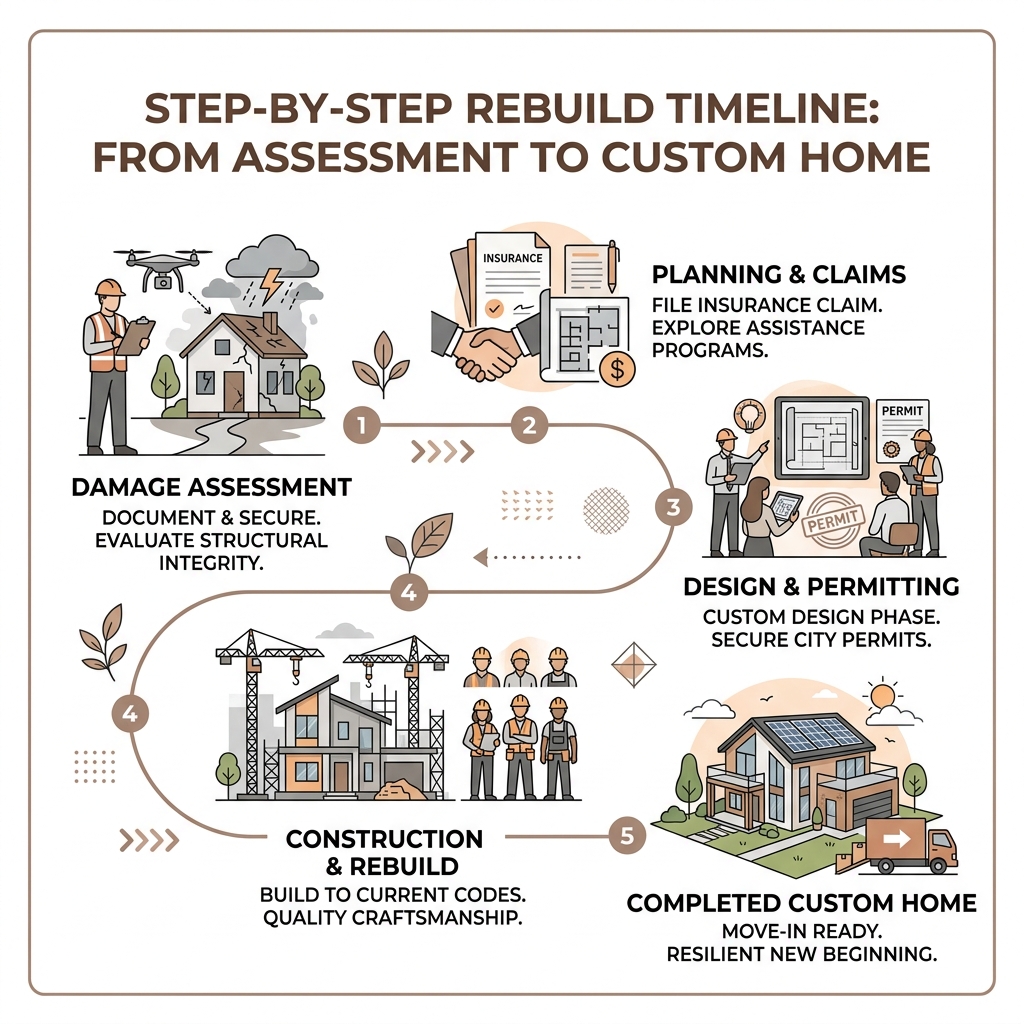
Immediate Steps After Property Damage in Jacksonville
To protect your property and ensure a successful rebuild, you must immediately document all damage, contact your insurance provider, and secure the site to prevent secondary issues like mold or structural collapse. Acting within the first 24 hours is critical for both safety and insurance claim accuracy.
When we see homeowners facing the aftermath of a storm or fire in Morgan County, the first instinct is often to start cleaning. However, safety must come first. Before entering a damaged structure, ensure that local authorities or utility companies have confirmed the area is safe. Disconnecting utilities—gas, electricity, and water—is a vital safety protocol to prevent fires or further flooding.
Once the site is stable, your primary job is documentation. We recommend taking clear, high-resolution photographs and videos of every room, including close-ups of structural cracks, water lines on walls, and damaged personal property. This evidence is the backbone of your insurance claim. To prevent the situation from worsening, you may need to engage emergency board-up services to secure broken windows or roof tarping to stop rain from entering.
In cases of significant water intrusion, moisture mitigation is essential. Stagnant water can lead to mold growth in as little as 24 to 48 hours, especially in our humid Illinois summers. Working with qualified emergency mitigation professionals can help stabilize the property while you prepare for the next phase of your rebuild. Finally, notify your insurance company immediately to open a claim file and receive guidance on their specific requirements for contractors and documentation.
Professional Damage Assessment Rebuild Jacksonville
A professional damage assessment involves a comprehensive evaluation of a home’s structural, electrical, and mechanical systems to determine if the property can be restored or requires a full custom rebuild. In Jacksonville, this process ensures that new construction meets current Illinois building codes and provides long-term safety.
We believe that a “quick look” isn’t enough when your home’s integrity is on the line. A true Damage assessment rebuild Jacksonville requires a deep dive into the skeleton of the house. This often involves hiring structural engineers who specialize in forensic analysis. They look beyond the surface to check for shifted foundations, compromised load-bearing elements, and micro-cracks in the slab that could lead to catastrophic failure years down the road.
During this phase, we look for:
- Foundation Analysis: Checking for heave, settlement, or lateral movement caused by hydrostatic pressure.
- Load-Bearing Integrity: Ensuring the wall studs, headers, and roof trusses still possess their original strength.
- Moisture Mapping: Using infrared cameras to find hidden pockets of water behind drywall or under flooring.
- Code Compliance: Evaluating if the existing structure can even be legally repaired under modern Illinois building standards.
For homeowners exploring post-disaster rebuilding services, the assessment stage sets the direction for every decision that follows. Working with qualified assessment and reconstruction professionals helps ensure every vulnerability is identified before rebuilding begins.
Why Professional Damage Assessment Rebuild Jacksonville Matters
Professional assessments identify hidden issues such as compromised framing or subsurface foundation cracks that standard inspections might miss. This technical depth is essential for securing permits and ensuring the enduring quality of your new home.
In Jacksonville, the permitting process for a major rebuild is rigorous. The city requires proof that the proposed construction is safe and compliant. An unbiased, professional evaluation from a structural engineer provides the data needed for these permits. Furthermore, a professional report protects your property value; when it comes time to sell, you can prove that the rebuild was handled with scientific precision, not just cosmetic patches.
Planning Your Damage Assessment Rebuild Jacksonville
Effective planning begins with a detailed report that serves as the blueprint for your reconstruction. This stage turns the assessment report into a reconstruction plan that aligns your daily needs, structural priorities, and finish selections.
We see a rebuild not just as a way to replace what was lost, but as a chance to build something better. By reviewing our fire reconstruction projects, you can see how thoughtful planning and durable materials support a successful rebuild. Planning involves choosing high-performance windows, advanced insulation, and floor plans that fit how you live today, ensuring long-term value and comfort.
Navigating Insurance and Recovery Assistance
Homeowners should leverage professional documentation to maximize insurance claims and explore government-backed programs for additional recovery support. Understanding the difference between “affected” and “destroyed” categories helps in aligning with federal assistance criteria.
Navigating the financial side of a disaster can be the most stressful part of the process. In Jacksonville, local and federal programs often use specific terminology to determine funding eligibility. For example, the City of Jacksonville has previously utilized Community Development Block Grant – Disaster Recovery (CDBG-DR) funds to assist families with housing repairs. While these programs are often specific to certain disaster declarations, they represent a significant resource for those who qualify.
| Damage Category | Description | Rebuild Implication |
|---|---|---|
| Affected | Cosmetic or very minor damage (e.g., porch or gutter damage) | Usually standard repair; no structural rebuild needed. |
| Minor | Interior flooding below 18 inches; manageable structural issues | Restoration is possible, but deep cleaning is required. |
| Major | Flooding over 18 inches; significant structural compromise | Rebuilding is often the more practical path when structural damage is extensive and long-term performance is the priority. |
| Destroyed | Flooding at roofline; total failure of walls or foundation | Complete custom rebuild is the only safe option. |
Because recovery programs vary by disaster declaration, homeowners should rely on current Illinois and local agency guidance when reviewing available assistance. For homeowners, this means that having a detailed, professionally prepared Damage assessment rebuild Jacksonville report is non-negotiable for proving the extent of your loss to both insurance adjusters and government agencies.
The Custom Rebuild Process: From Demolition to Keys
The custom rebuild process replaces a damaged structure with a newly constructed home managed by Yingling Builders and built with a quality-first construction approach. This approach offers more cost predictability and peace of mind than attempting to patch extensive damage.
At Yingling Builders, we take a hands-on approach to every rebuild. Our team is dedicated to guiding you through our seamless process. Because we closely manage construction oversight, each rebuild is held to Yingling Builders’ quality standards.
The process typically follows these steps:
- Design Consultation: We partner with a team of expert designers to translate your vision into a workable plan.
- Authentic Renderings: As an optional service, we can provide authentic renderings so you can visualize your new home before construction begins.
- Permitting and Demolition: We handle the logistics of clearing the site and securing all necessary Jacksonville building permits.
- Foundation and Framing: We build a fortified foundation and a precision-framed structure that exceeds local codes.
- Finishing Touches: From cabinetry to resilient flooring, each finish is coordinated by Yingling Builders with trusted trade partners to support a cohesive, high-quality result.
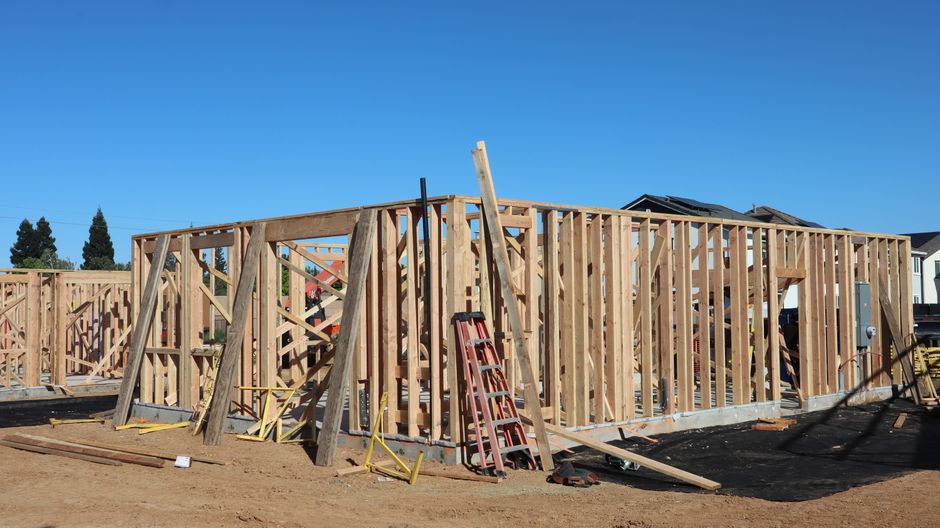
Choosing to rebuild instead of patching extensive damage often provides a clearer path to long-term performance, code compliance, and construction planning. Restoration frequently uncovers hidden mold, smoke damage, or structural issues that can disrupt the scope of work mid-project. A new build starts with a clean slate and a fixed plan.
Structural Integrity and Resilience Strategies
Modern rebuilds in Jacksonville focus on resilience strategies, such as advanced roofing systems and moisture-resistant materials, to protect against future extreme weather events. Incorporating these high-value concepts ensures your home remains a safe haven for decades.
In West Central Illinois, we have to build for everything from heavy snow loads to high-wind thunderstorms. Resilience isn’t just a buzzword; it’s about using science-based building techniques. This includes:
- Advanced Roofing: Using high-impact shingles and secondary water barriers to prevent leaks even if the primary roof is damaged.
- Fortified Foundations: Implementing superior drainage systems and reinforced concrete to handle soil expansion and contraction.
- Climate-Adaptive Materials: Selecting siding and insulation that can withstand extreme temperature swings without degrading.
By focusing on these high-value upgrades during your Damage assessment rebuild Jacksonville phase, you aren’t just restoring your life; you are enhancing your lifestyle with a home that is quieter, more energy-efficient, and significantly safer.
Frequently Asked Questions about Rebuilding
How quickly should I start the restoration process?
You should initiate a professional assessment within 24 hours of the event to prevent secondary damage like mold growth and to provide the most accurate data for your insurance claim. The longer water or smoke sits in a structure, the more “invasive” the damage becomes, often turning a repairable situation into a mandatory rebuild.
Is it better to restore or rebuild after a major storm?
If the structural integrity is compromised or the cost of restoration approaches the price of new construction, a custom rebuild is often the superior choice for long-term value, safety, and modern efficiency. A new build comes with modern warranties and is built to the latest safety codes, which restoration cannot always guarantee.
What role do structural engineers play in the rebuild?
Structural engineers provide the necessary technical designs and certifications required for building permits, ensuring that the new structure can withstand local environmental stresses. They are the “scientists” of the building world, ensuring that your home’s bones are strong enough to last for generations.
Conclusion
Rebuilding after a disaster is a journey that requires a dedicated partner committed to craftsmanship and a seamless experience. By focusing on enduring quality and a client-first partnership, you can transform a challenging situation into a fresh start in a home designed for your future.
Yingling Builders specializes in high-end custom homes and renovations in West Central Illinois, delivering excellence through a dedicated team and partnerships to ensure your vision is realized with precision. For homeowners in Jacksonville and across West Central Illinois, Yingling Builders provides a quality-first path to rebuilding after major property damage.
Contact Yingling Builders to discuss your damage assessment rebuild Jacksonville project and take the next step toward rebuilding your home with confidence, craftsmanship, and a clear plan.