
Why Working With a Licensed Home Builder Matters
A licensed home builder is a residential construction professional who meets the licensing and registration requirements that apply in the project’s jurisdiction. This credential provides homeowners with critical protection and ensures the project meets rigorous safety and quality standards.
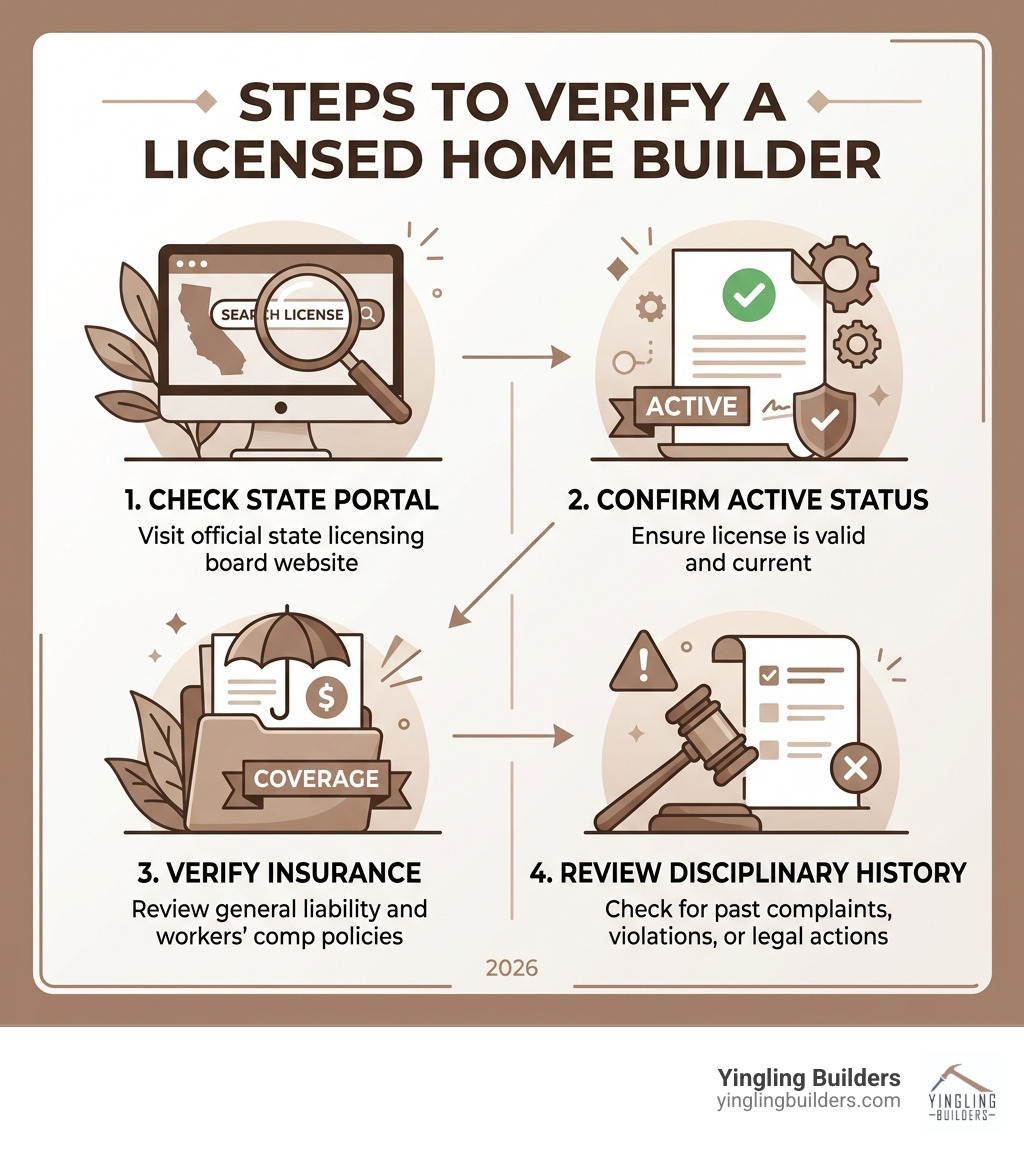
How to quickly verify a licensed home builder:
- Visit the Illinois Department of Financial and Professional Regulation (IDFPR) or your local building authority website.
- Search the builder’s name or license number in the license lookup tool.
- Confirm the license is active and in good standing.
- Check for any disciplinary actions or complaints on file.
- Verify the builder carries general liability insurance and workers’ compensation coverage.
Building a custom home is one of the biggest decisions you’ll ever make. Verifying that your builder is properly licensed is the most important early step in the process. Licensing signals that a builder has demonstrated real competency—passing rigorous trade and business law exams, maintaining financial accountability, and committing to ongoing professional standards.
Working with a properly credentialed licensed home builder helps Illinois homeowners reduce the risk of code issues, insurance gaps, and avoidable disputes. Checking a builder’s credentials takes just minutes and ensures your investment is protected by professional accountability.
Defining the Role of a Licensed Home Builder
A licensed home builder is a credentialed professional authorized to manage residential construction in accordance with applicable licensing, code, and insurance requirements. These individuals are legally authorized to manage complex projects, ensuring every phase of construction adheres to strict safety codes and quality benchmarks.
When we talk about a licensed professional, we are referring to someone who has gone through a rigorous vetting process. This isn’t just about knowing how to swing a hammer; it’s about understanding the “why” behind every structural choice. A license serves as a bridge between architectural vision and physical reality, ensuring that the home is not only beautiful but structurally sound and legally compliant.
For homeowners in West Central Illinois, from Mount Sterling to Jacksonville, working with Trusted Home Builders adds local code familiarity and accountability to the process. We take this responsibility seriously because consumer safety is the foundation of our industry. By choosing Local Home Builders, you are ensuring that your investment is protected by state-mandated standards of excellence.

State-Specific Licensing Requirements and Thresholds
Licensing and registration requirements for a licensed home builder vary by jurisdiction, so Illinois homeowners should verify what applies to their specific project and location. These thresholds are designed to protect consumers by ensuring that significant financial investments are managed by qualified, legally authorized individuals.
Illinois homeowners should confirm whether their builder’s licensing, registration, and insurance credentials are active before construction begins. These regulations prevent unqualified individuals from taking on structural projects that exceed their technical skill set. For high-end custom homes, ensuring your builder meets these legal requirements is essential for maintaining the structural integrity and legal compliance of your property.
As a premier Custom Home Builder Company, we recognize that these regulations exist to maintain a level playing field and ensure quality. Whether you are in Quincy, Pittsfield, or Beardstown, understanding these local requirements helps you identify when a professional is legally required for your project.
| License Category | Typical Scope of Work | General Threshold |
|---|---|---|
| Residential Basic | One-family to three-family residences | Varies by jurisdiction |
| Residential Light Commercial | Multifamily and small commercial structures | Varies by state |
| General Contractor | Unlimited residential and commercial | Highest financial requirements |
The Path to Professional Certification and Exams
To earn the title of a Licensed home builder, candidates must pass comprehensive examinations that test both technical trade knowledge and business law. These exams ensure the builder understands structural integrity, safety regulations, and the legalities of construction contracting.
The examination process is often two-fold. First, there is the trade exam, which covers the technical aspects of construction—from foundation work and framing to roofing and finish carpentry. These exams require builders to demonstrate a deep understanding of the International Residential Code (IRC) and local safety standards.
A licensed home builder must understand contracts, insurance obligations, and compliance requirements in addition to construction methods. This covers labor laws, contract management, insurance requirements, and financial accounting. A builder who knows how to build a wall but doesn’t know how to manage a contract is a risk to the homeowner. Some jurisdictions also recognize the NASCLA exam, which provides a national standard for contractor competency.
At Yingling Builders, we believe that education is a lifelong journey. Understanding the complexities of Uncovering the Best New Home Builders is what separates a hobbyist from a professional. Our commitment to these standards is why we are featured in the Best Local Custom Builder Guide.
Preparing for the Licensed Home Builder Exam
Successful candidates utilize open-book testing strategies to navigate timed state exams effectively. These exams focus on the ability to find and apply correct information quickly and accurately within approved reference manuals.
Key strategies include:
- Permanent Tabbing: Using approved, permanent tabs to mark important chapters in reference manuals like the International Residential Code (IRC).
- Highlighting: Using specific colors to highlight key definitions, tables, and safety requirements within the text.
- Reference Manuals: Utilizing the exact editions of books allowed by the testing agency, such as the NASCLA Contractor’s Guide to Business, Law and Project Management.
Essential Business Credentials and Financial Stability
A Licensed home builder must maintain essential business credentials, including general liability insurance, workers’ compensation, and verified financial stability, to ensure project continuity and consumer protection. A license is a commitment to financial transparency and liability protection for the homeowner.
A licensed home builder should be able to document the insurance, registration, and business credentials needed to support a professionally managed project. This ensures that the builder can maintain consistent progress on your home. Additionally, professional builders must provide proof of:
- General Liability Insurance: This protects your property in case of accidental damage during construction.
- Workers’ Compensation: This ensures that if a member of the construction team is injured on your site, the builder—not the homeowner—is responsible for the medical costs.
- Business Registration: Proper registration with the Secretary of State and local jurisdictions.
These credentials are vital for those following a Luxury Home Builders Guide. When you are evaluating Custom Home Builders, these protections help you compare providers based on professionalism and accountability.
Why Hire a Licensed Home Builder for Custom Projects?
Hiring a licensed professional ensures your investment is protected by a builder who prioritizes long-term value, enduring quality, and a seamless construction experience. A licensed home builder helps protect the quality, compliance, and long-term performance of your custom home.
When you work with a professional, you are entering into a partnership characterized by:
- Enduring Quality: Using materials and methods that stand the test of time, rather than cutting corners for short-term savings.
- Enhanced Lifestyle: Designing and building spaces that reflect how you actually live, from functional kitchens to serene master suites.
- Professional Partnership: Clear communication, detailed contracts, and a structured building process that minimizes stress.
Frequently Asked Questions about Professional Builders
How can I verify a builder’s license status?
You can verify a builder’s license status by using official state or local licensing board portals, such as the Illinois Department of Financial and Professional Regulation (IDFPR), to perform a formal license lookup. Always ensure the credential is “Active” and check for any history of disciplinary actions.
What are the continuing education requirements for builders?
In many jurisdictions, builders must complete annual continuing education to keep their licenses active. This typically includes mandatory hours on business law, safety protocols, and evolving state regulations. This ensures that your Licensed home builder is up-to-date on the latest safety codes and construction technologies.
Do licensed builders offer warranties?
Warranty terms vary, so homeowners should ask each licensed home builder for written warranty details before signing a contract. It is common to see a one-year warranty on workmanship and materials, and up to a 10-year warranty on major structural components. This is a hallmark of a professional who stands behind their work.
Conclusion
Choosing a licensed home builder for your Illinois custom home means prioritizing craftsmanship, accountability, and a clear construction process. Yingling Builders specializes in high-end custom homes and renovations across West Central Illinois with a quality-first approach to custom construction.
We deliver enduring quality and long-term value that far outlasts the construction phase. Our goal is to provide a partnership that results in a home as unique as the families who live in them.
Ready to work with a licensed home builder who values craftsmanship, accountability, and a thoughtful client experience? Contact Yingling Builders today to start the conversation about your custom home in West Central Illinois.